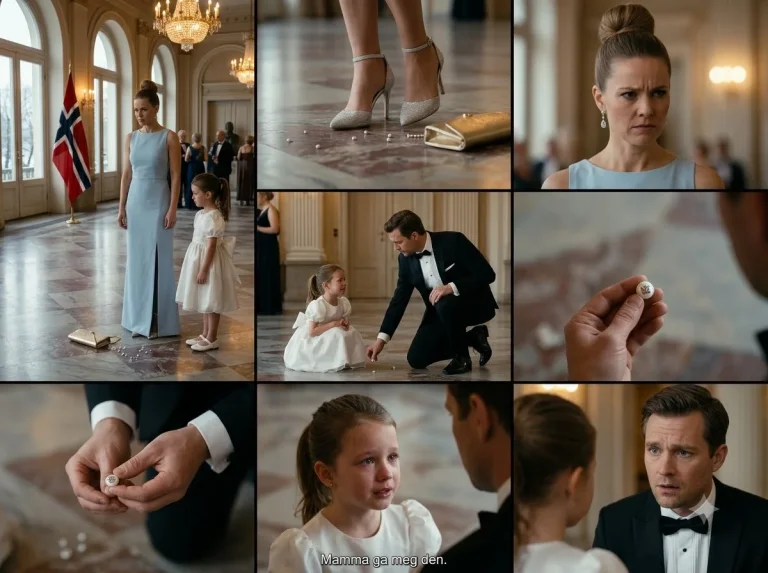
I remembered that night.
A charity exhibition at a restored theater.
I had been presenting architectural plans for Harbor House.
Vincent approached me afterward.
He complimented my work.
He asked me to dinner.
He made me laugh.
I had believed it was chance.
Something beautiful.
Something unexpected.
Now I stared at the memorandum.
My love story had begun as a business strategy.
“Did he know?” I asked.
Richard didn’t hesitate.
“Yes.”
I stood.
Eleanor reached toward me, but I moved away.
I crossed the room.
My chest felt hollow.
“Was anything real?”
Richard’s voice cracked.
“I believe Vincent came to love you.”
I turned.
“That’s supposed to comfort me?”
“No.”
“Then why tell me?”
“Because I was part of the beginning. I won’t pretend otherwise.”
I looked at him with all the grief and rage I had been carrying.
“You wanted my mother’s property.”
“Yes.”
“You sent your son to charm me.”
“Yes.”
“And when I refused to sell, what happened?”
Richard’s silence told me he knew where my thoughts were going.
I moved closer.
“Did you tell him to steal my children?”
He looked horrified.
“No.”
“Did you help him?”
“No.”
“Did you know he had done it?”
“No.”
I stared into his eyes.
For the first time, I believed him.
Not because he was innocent.
He wasn’t.
He had treated me as an obstacle to be managed.
He had used his own son to manipulate my life.
But the shock on his face when I mentioned the children was genuine.
Richard slowly sat down.
“I built an empire,” he whispered. “And somewhere along the way, I taught my son that anything could be acquired if he wanted it badly enough.”
Eleanor watched him.
“Yes,” she said quietly.
“You did.”
Richard lowered his head.
“And now,” Eleanor continued, “you have a choice about what you teach him next.”
The following morning, Georgia received an urgent call.
One of Daniel’s investigators had located an employee connected to North Shore Family Services.
Her name was Ana Ortiz.
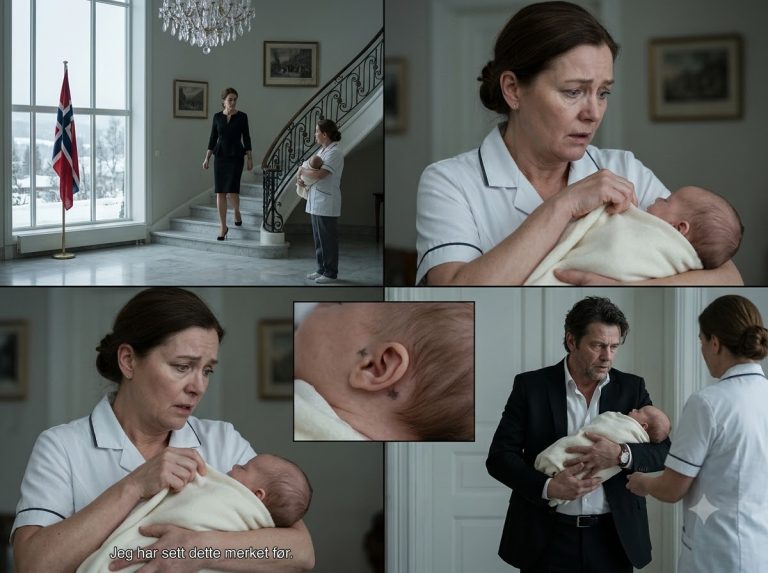
She was fifty-eight years old, a retired pediatric nurse who had been hired as a private caregiver for a little boy living on an estate near Lake Michigan.
The child was called Theo Ward.
He was three years old.
He had dark curly hair.
Blue-gray eyes.
And a small crescent-shaped scar near his left eyebrow.
Sophia began shaking when she heard the description.
Her son’s birth photograph showed a similar mark.
Georgia cautioned us that resemblance was not proof.
But she had already requested an emergency legal review of the child’s records.
Ana had contacted authorities because she believed the boy’s identity had been falsified.
She had also kept copies of vaccination records, photographs, and messages from Peter Langford.
The messages referred to the child as the heir.
I stared at those words.
The heir.
Not the boy.
Not Theo.
Not a child who needed love.
The heir.
I asked Georgia what that meant.
She hesitated.
Then she said, “There’s something about the Moretti family trust we need to discuss.”
Richard’s father had established a succession trust decades earlier.
It was an old-fashioned document built around male inheritance.
Under its terms, a substantial block of voting rights would eventually pass through the eldest qualifying male descendant.
The arrangement had been amended over the years, but several provisions remained in force.
Vincent had been fighting Richard for control of those voting rights.
If Vincent could prove he had a biological son, certain inheritance protections might strengthen his future claim.
The full legal implications were complicated and disputed.
But the motivation was suddenly horribly clear.
I sat in silence.
Then I asked, “So he wanted a son?”
Georgia nodded carefully.
“That appears to be part of it.”
I looked at Sophia.
Her face had gone white.
“And when she had twins?”
Neither woman answered.
I understood anyway.
A son could become an heir.
A daughter could be hidden.
And the woman whose embryos had been used?
She could remain a grieving wife.
I pressed a hand against my stomach.
Vincent hadn’t simply stolen my chance to become a mother. He had tried to turn my children into instruments of his ambition.
Sophia began crying.
“I held both of them,” she whispered.
I turned.
“At the hospital. Just for a moment. Before they took him away.”
She pressed her hands against her face.
“He was so small. His fingers curled around mine.”
I moved beside her.
“I thought he died. I thought I failed him.”
I held her shoulders.
“You didn’t.”
She looked at me through tears.
“I should have demanded to see him.”
“You trusted the doctors.”
“I should have fought.”
I shook my head.
“No.”
My voice was firm.
“Someone lied to you. Someone used your love against you.”
She covered her face.
I knelt beside her.
“We’re going to find him.”
Finding Theo required more than determination.
We couldn’t simply storm into a private estate and take a child whose legal identity was still being investigated.
Georgia explained that clearly.
We needed evidence strong enough to persuade a court that immediate intervention was necessary.
Daniel needed proper legal authority.
And Vincent could not learn how much we knew.
For two days, I lived between hope and terror.
I slept little.
I barely ate.
Every time I closed my eyes, I imagined a small boy somewhere in an enormous house, waiting for someone who would never come.
Ana Ortiz agreed to speak with investigators.
She described a gentle child who loved toy trains and picture books.
He called her Miss Ana.
He had never attended preschool.
His medical appointments were arranged through private providers.
Most visitors arrived only after he had gone to bed.
One man visited occasionally.
Tall.
Dark-haired.
Always wearing expensive suits.
Vincent.
Ana had once asked whether the man was Theo’s father.
He told her the boy was his nephew.
Then he warned her not to discuss the child’s family.