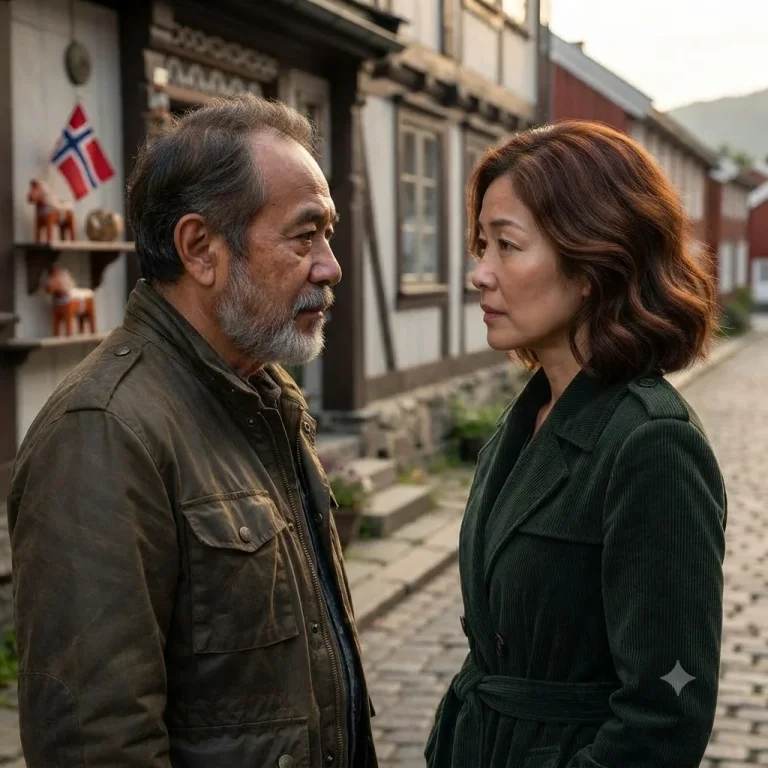
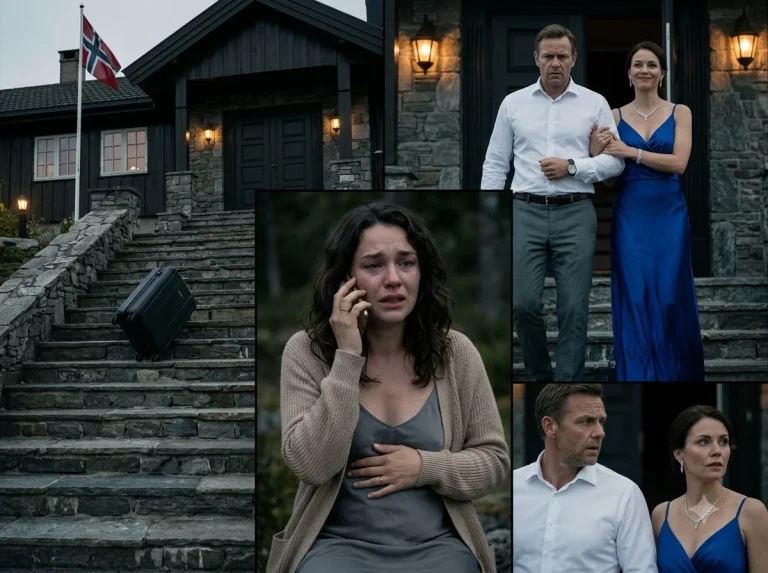
“I loved you.”
“That isn’t what I asked.”
He said nothing.
I felt my heart hardening around a terrible new certainty.
“You need to leave.”
He moved toward me.
“Listen. Sophia is unstable. She has been making demands, threatening people, imagining things.”
“Don’t.”
“I’m telling you the truth.”
“You’ve forfeited the right to use that phrase.”
He gripped my wrist.
Not painfully.
But firmly enough to stop me from moving.
“You don’t understand who you’re dealing with.”
I looked down at his hand.
Then up at his face.
“Let go.”
He hesitated.
“Vincent.”
Something in my voice made him release me.
I stepped away.
“Get out of my studio.”
He stood motionless.
Then his expression changed.
The pleading vanished.
His voice became cold.
“You should be careful, Claire.”
I felt fear move through me.
But I held his gaze.
“Is that a threat?”
He looked around the studio.
At the architectural drawings.
At photographs of Harbor House.
At the models of buildings I had spent years restoring.
“Everything you’ve built is connected to this family.”
I swallowed.
“Not everything.”
He glanced at my wedding ring.
I had placed it on a chain around my neck.
His eyes narrowed.
“You’re still wearing it.”
I reached beneath my blouse.
Unfastened the chain.
Removed the ring.
Then placed it beside his roses.
“Not anymore.”
For several seconds, he stared at it.
Then he turned and left.
The moment the door closed, my legs gave way.
But I didn’t cry.
I opened my laptop.
And I called Georgia.
“I’m ready to fight.”
The next seventy-two hours changed my understanding of the Moretti family forever.
Georgia moved quickly.
She arranged independent genetic testing through an accredited laboratory, with Sophia’s consent and proper documentation.
She contacted a medical-records specialist.
She also introduced me to Daniel Cho, a federal investigator who had been examining suspicious financial activity involving companies connected to Saint Catherine’s clinic.
I expected him to look like a movie detective.
Instead, he was a quiet man in a navy suit who spoke gently and listened carefully.
He reviewed the documents without promising anything.
“Mrs. Moretti,” he said, “I can’t tell you what this means until we verify the evidence. But the clinic’s ownership structure is unusual.”
“How?”
“Several entities changed names shortly after the alleged storage failure.”
“And?”
“One of the entities received money from a Moretti-controlled investment account.”
My mouth went dry.
“Vincent?”
“We’re still establishing who authorized the transactions.”
I looked toward Eleanor.
She sat beside me, her hands folded tightly.
Daniel continued.
“We also found an unusual medical billing pattern from three years ago involving a private pediatric care provider.”
“What provider?”
He turned his laptop slightly.
On the screen was a name.
Lakeview Children’s Residential Care.
A small private facility outside Chicago.
I frowned.
“What does that have to do with me?”
“We don’t know yet.”
He paused.
“But one account has been billed continuously for a child whose identity records are restricted.”
A strange chill moved through me.
“Since when?”
Daniel checked the date.
“March eighteenth, three years ago.”
I stopped breathing.
March eighteenth.
Sophia’s twins had been born on March eighteenth.
I gripped the edge of the table.
“That’s the day.”
Daniel looked at me.
“What day?”
“The day Lila was born.”
His expression sharpened.
Eleanor covered her mouth.
And suddenly I remembered the photograph.
The pink bracelet.
The blue bracelet.
A baby boy who was supposedly dead.
I looked at Daniel.
“What if her son didn’t die?”
The genetic results arrived four days later.
I was at Eleanor’s sister’s house in Wisconsin.
Her sister, Margaret, was seventy-one and lived in a modest farmhouse surrounded by apple trees.
She wore oversized sweaters, swore when her coffee machine malfunctioned, and treated Eleanor’s expensive shoes as an ongoing personal insult.
Within an hour of meeting her, I understood why Richard disliked her.
Sophia and Lila had been staying there for two days.
I had joined them after Georgia suggested that I leave Chicago temporarily.
Lila had become fascinated by the farmhouse chickens.
She named every one of them Princess.
There were six.
Margaret decided this was a perfectly reasonable naming system.
That morning, I sat at the kitchen table while Lila colored beside me.
She had drawn another house.
This one had four windows.
“Who lives here?” I asked.
“Me and Mommy.”
She paused.
“And Auntie Ellie.”
That was what she called Eleanor.
I smiled.
“Anyone else?”
Lila pointed at me.
“You.”
Then she added a small figure near the door.
I stared.
“Who’s that?”
She lowered her voice.
“My brother.”
My skin prickled.
I looked at Sophia.
She was standing beside the sink.
Her face had gone pale.
“Lila, sweetheart,” she said softly, “we talked about this.”
Lila frowned.
“But I saw him.”
The kitchen fell silent.
Sophia crossed the room.
“When?”
“In the big house.”
My heart began racing.
“What big house?”
Lila looked at me.
“The one with the pond. The nice lady gave me cookies.”
Sophia’s hands trembled.
I crouched beside the little girl.
“Lila, did you see a boy there?”
She nodded.
“He looked like me.”
I heard Eleanor gasp behind me.
Lila continued innocently.
“Daddy Vincent said he was sleeping.”
Sophia made a strangled sound.
She had never called Vincent Lila’s father.
I looked at her.
“When did Vincent take Lila to a big house?”
Sophia sank into a chair.
“Three weeks ago. He insisted on seeing her. He said he had information about her medical records.”
I swallowed.
“Was there a pond?”
“Yes.”
“Did you go inside?”
“No. His driver took Lila while I waited in the car. He said the doctor needed to examine her privately.”
Margaret appeared in the doorway.
“What the hell is happening?”
Before anyone could answer, my phone rang.
Georgia.
My hands shook as I answered.
“Claire, are you sitting down?”
“Yes.”