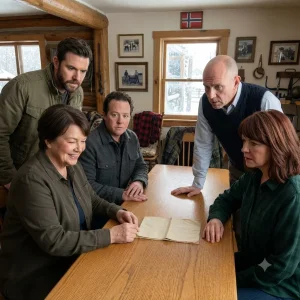
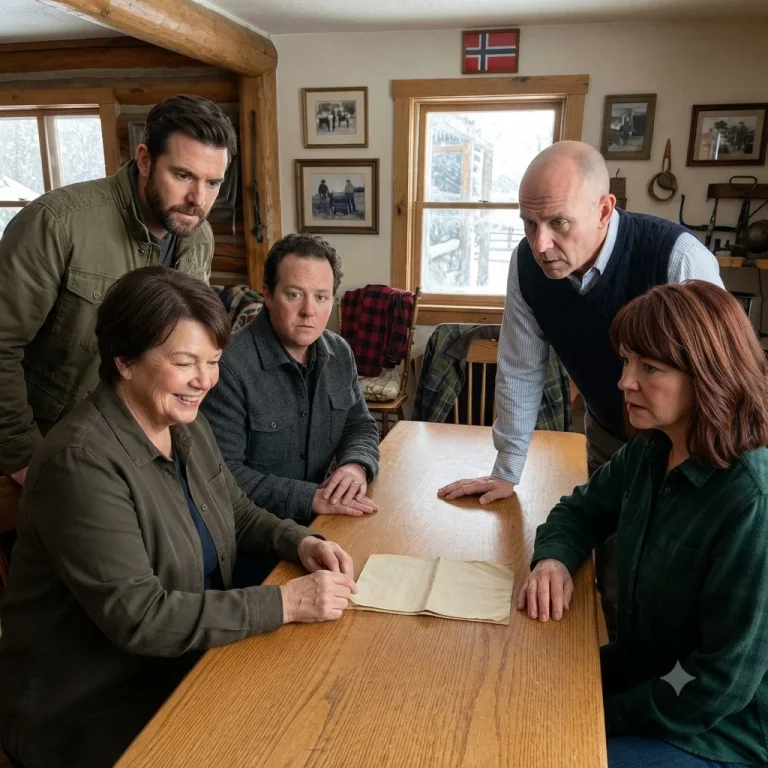
He looked toward Eli.
“Elias is not inheriting Whitmore Development.”
Grant stopped.
“He receives no shares personally, no dividends and no beneficial interest in the voting block.”
Nathaniel opened a document.
“The block will be transferred into trust,” August continued. “Elias will serve as trustee and executive of that trust for a fixed court-set fee.”
Eli stared at him.
August went on.
His responsibility would be to evaluate which Whitmore family member met the conditions written into the trust and vote the controlling shares accordingly.
If no family member qualified, the block would ultimately be sold and the proceeds distributed according to the instrument.
Nathaniel spoke for the first time.
“Mr. Whitmore underwent independent capacity examinations by two physicians in September. Both evaluations are attached as exhibits. The instrument contains a no-contest provision.”
Grant heard the same thing everyone else did.
August had expected a challenge.
Worse, he had prepared for it months earlier.
Eli finally found his voice.
“I didn’t ask for this.”
August looked at him.
“I know.”
“I don’t want your company.”
“I know that too.”
“Then why me?”
August’s answer came without hesitation.
“That is precisely why.”
Grant stood again.
“He is not family.”
August looked toward him.
Grant continued.
“He was divorced out of this house three years ago. He has no stake in Whitmore Development. He doesn’t have a finance degree. He has no corporate position. There is not one person in this room who can explain why you would hand him the keys.”
August studied his son.
“You just did.”
Grant frowned.
“Everyone at your table has a financial interest in the answer.”
August turned toward Eli.
“He does not.”
Grant sat.
He did not look defeated.
He looked exposed.
Preston tried next.
He leaned back in his chair and addressed Eli directly.
“Well, this is impressive.”
Eli said nothing.
“How long did it take you?”
“To do what?”
“To get into his ear.”
Clare turned.
“Preston.”
He ignored her.
“A few private visits to a lonely man in his seventies can apparently be productive.”
Eli looked at August.
Then back at Preston.
“I haven’t been inside this house in three years.”
Preston’s smile remained.
“I’ve spoken to August exactly once during that time.”
The smile weakened.
“For six minutes. About a desk.”
August nodded.
“That is correct.”
Preston looked toward him.
“I deliberately did not tell Elias about the trust,” August said. “The quality I needed from him is the one quality that stops being useful the moment you buy it.”
For the first time all evening, Preston had nothing ready to say.
August turned to the rest of the room.
“I owe you an explanation.”
His gaze settled on Grant.
“It begins with Fairmont Row.”
Eleven years earlier, Fairmont Row had been Whitmore Development’s largest residential project.
Four hundred units.
A project intended to establish the next generation of the company.
Eli had managed the structural phase.
Eight months into construction, he flagged a discrepancy in steel delivered for the parking structure and lower floors.
The mill certifications did not match the material.
A supplier had substituted a lower grade.
Part of the work had already been enclosed.
Correcting it would require removing finished sections.
The delay could run seven months.
The cost could approach fifty million dollars.
Grant had been the executive overseeing the project.
He brought in a third-party engineer.
The engineer produced a letter saying the substitution remained within acceptable tolerance.
Then Grant asked Eli to sign the structural acceptance certificate.
Eli refused.
Grant asked again.
Eli refused in writing.
Then came a meeting inside the Whitmore study.
August had been there.
Eli had been told, plainly, that he could sign the certificate or find somewhere else to work.
At the time, August had received Grant’s version of the dispute.
He had trusted his son.
He had never reviewed the underlying documents.
Eli left the company that month.
Within a week, another story began moving through the industry.
Elias Rowan had buckled under pressure.
The Fairmont project had been too large for him.
He was talented enough for ordinary work but lacked the temperament required at the top.
The story came from the Whitmore circle.
People believed it.
Calls stopped being returned.
Offers disappeared.
One version of Eli’s career ended before he fully understood anyone had ended it.
Clare covered her mouth with both hands.
She looked at Eli through the open doorway.
For eleven years, she had possessed only fragments.
He had told her the job had not worked out.
He had been unable to sleep for weeks afterward.
He had resisted discussing the project.
Later, when he opened the furniture shop, she had tried to defend him to her family.
Eventually, she had become tired of defending a decision she did not understand.
Then she had slowly begun to accept their version.
Eli had wanted something smaller.
He had lacked ambition.
He could not handle the pressure.
Now she was hearing what he had never told her.
He had not walked away from a career because the job was too difficult.
He had walked away because staying required his signature on something he did not believe was safe to approve.
August lowered his eyes.
“I believed my son.”
Grant did not move.
“I believed him without reading the documents myself.”
Eli stared at the paper tablecloth.
Hearing the story spoken aloud was strangely more difficult than living with it privately had been.
August continued.
“Four years later, during an insurance audit on another property, I found a reference to Fairmont Row that did not match what I remembered.”
He pulled the archived project file.
The disputed steel had ultimately been removed.
Not because Grant changed his mind.
Not because the engineer withdrew the letter.
Because Eli’s refusal delayed the certificate for eleven days.
During those eleven days, the general contractor’s insurer required an independent inspection.
The inspection forced the correction.
Had Eli signed when instructed, construction would have continued above compromised material.