Evelyn Bellamy.
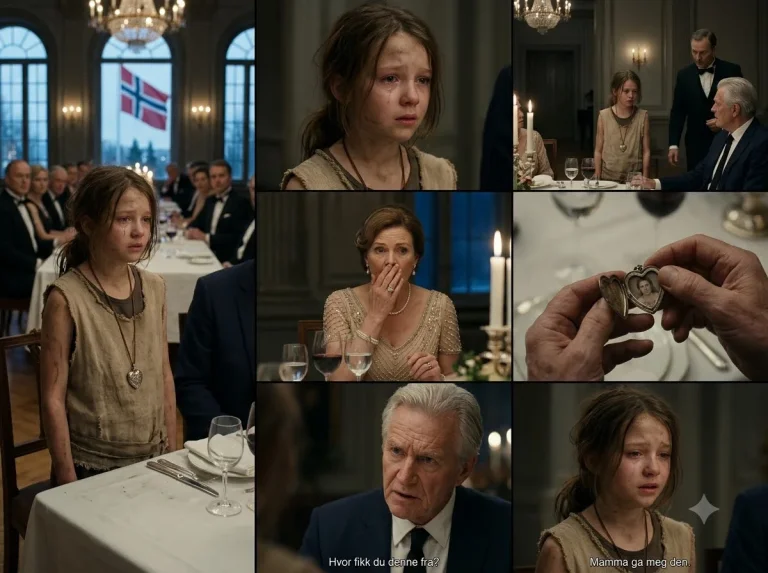
The applause began softly.
Then grew.
People stood.
Some were crying.
Others were filming.
I stood there with tears running down my face, remembering my mother’s thin fingers fastening a delicate bracelet around my wrist.
The hands that make something beautiful must never disappear from its history.
“Mom,” I whispered, “they know.”
Justice didn’t arrive overnight.
It took fourteen months.
There were forensic examinations, financial investigations, depositions, court hearings, and an avalanche of records stretching back decades.
Miriam’s fraudulent filings were exposed.
The custody documents attributed to me were shown to be fabricated.
The contact letters were traced to her office.
The investigation also uncovered evidence of forged corporate transfers and diverted funds.
Sophia’s involvement in the bracelet theft and financial scheme became the subject of separate proceedings.
She eventually agreed to cooperate with prosecutors.
Alessandro lost control of the disputed Aurelia interests while civil proceedings determined the proper ownership and remedies.
Vincent turned over business records and testified about what he knew.
He also resigned from the Aurelia board.
For the first time in his adult life, he chose something other than protecting the Moretti name.
The eventual court-approved settlement recognized the historic rights of the Echo trust and established a process to restore value to the surviving artisans and their lawful beneficiaries.
Some of the women had died.
Others were in their seventies or eighties.
A few still lived in modest apartments, unaware that the work they had performed decades earlier had helped build a luxury empire.
When the first distributions were approved, Hannah brought her mother to my studio.
Her mother was holding an old photograph of Ruby Pierce.
She stared at the document showing the family’s restored interest.
Then she began to cry.
“My mother used to say she helped make those jewels,” she whispered. “Nobody listened.”
I took her hand.
“I’m listening.”
That became the most meaningful work of my life.
Not the money.
Not the headlines.
Not the public apologies.
Giving people back the dignity of being seen.
With Gabriel’s help, I expanded my workshop into a training studio for single parents, survivors rebuilding their lives, and people who had been told they were too old or inexperienced to begin again.
We named it Echo.
The competition ultimately postponed its grand-prize decision because of the ownership investigation.
I didn’t mind.
By then, I had won something no prize could have given me.
My mother’s story had finally been told.
And so had mine.
Vincent didn’t disappear.
But he no longer demanded that I return to him.
He asked permission to begin building a relationship with Noah.
Through attorneys and a child-development specialist, we established a gradual visitation arrangement.
The first few meetings were supervised.
Vincent brought books, toy trains, and little dinosaur figurines.
At first, Noah called him Mister Vincent.
Then simply Vincent.
One afternoon, after they spent two hours building a model bridge together, Noah asked me a question.
“Mommy, is Vincent the daddy I had when I was a baby?”
I sat beside him.
“Yes, sweetheart.”
He considered that.
“Then why wasn’t he here?”
The question hurt.
I took my son’s little hands.
“Because grown-ups sometimes make very big mistakes.”
“Did he forget me?”
I felt tears gather.
“No, honey. But he didn’t do what a good father should have done.”
Noah was quiet.
Then he asked, “Is he learning?”
I looked through the window.
Vincent was standing beside Gabriel in the garden.
They were discussing a broken wooden birdhouse.
Two very different men.
One who had helped bring Noah into the world.
One who had helped him grow up.
“Yes,” I whispered. “I think he is.”
My son nodded seriously.
“Good. Daddy says everybody has to learn things.”
I smiled through tears.
“He does.”
Noah hugged me.
Then ran outside to help repair the birdhouse.
I watched Vincent crouch beside him.
He looked older now.
Quieter.
Less certain of himself.
Perhaps that was a good thing.
He had finally learned that love couldn’t be commanded.
It couldn’t be purchased.
And it couldn’t be reclaimed simply because you regretted losing it.
Love had to be earned in the ordinary moments, long after the grand apologies ended.
On a sunny afternoon the following spring, Gabriel and I were married in a small garden overlooking Lake Michigan.
There were no politicians.
No armed guards.
No thousand-dollar champagne.
Only family, close friends, flowers, laughter, and a little boy who insisted on carrying the wedding rings inside a wooden dinosaur.
Hannah cried during the vows.
Rosa cried even harder.
And I cried when Gabriel looked into my eyes and said, “I promise never to confuse protecting you with controlling you.”
I squeezed his hands.
“I promise to tell you when I’m afraid, and to remember that I never have to disappear to deserve love.”
When he kissed me, Noah cheered louder than anyone.
Later, while the guests ate cake, my son approached me carrying a tiny blue box.
“Mommy, I have something.”
I crouched.
“What is it?”
He opened the box.
Inside was a bracelet.
It was made of twisted gold-colored wire and small blue beads.
One side was crooked.
The clasp was uneven.
It was clearly the work of a child.
Gabriel smiled from a few feet away.
“He insisted on making it himself. I helped with the sharp tools.”
Noah looked worried.
“It’s not real gold.”
I lifted it gently.
“It’s beautiful.”
“And the blue things aren’t real sapphires.”
I felt my throat tighten.
“That’s okay.”
He touched the bracelet.
“Daddy said Grandma Evelyn made you one a long time ago, but a mean lady broke it.”
I glanced toward Gabriel.
He looked at me with quiet tenderness.
Noah continued.
“So I made you another one. Because if somebody breaks this one, I’ll make another.”
Tears spilled down my cheeks.
I pulled him into my arms.
“Oh, Noah.”
He hugged me.