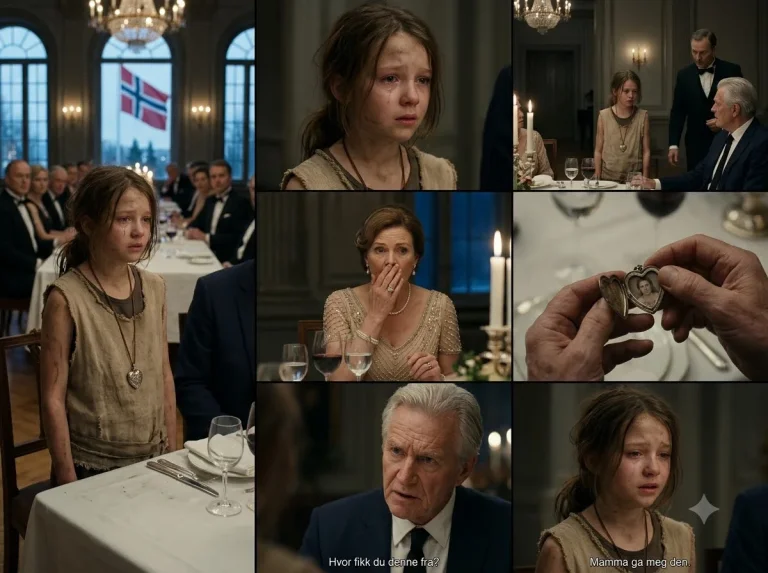
“Er du sikker?”
“Jeg har aldri vært mer sikker.”
Han skrev ut avslutningsorden.
Jeg la den i marinemappen.
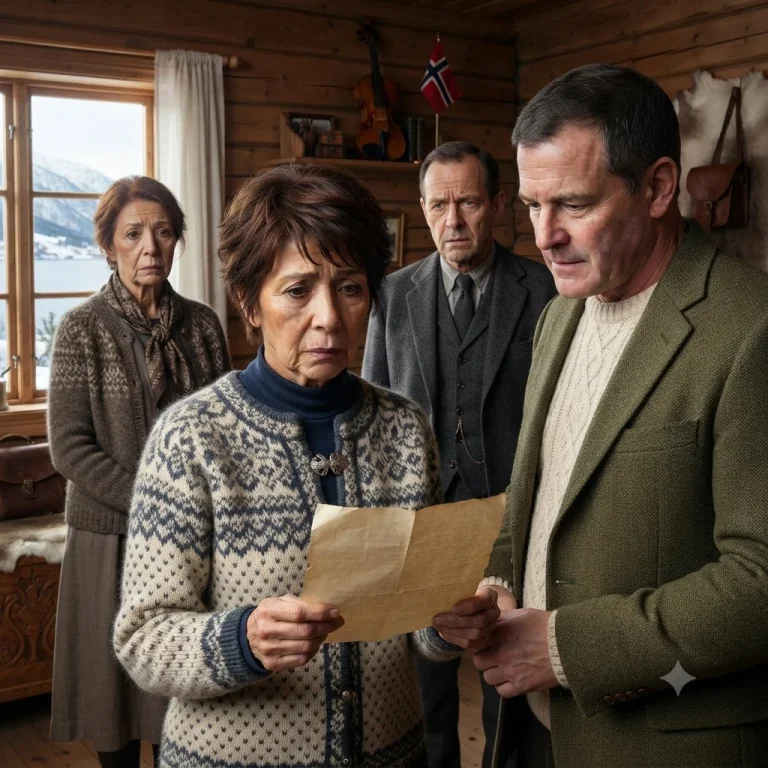
På parkeringsplassen åpnet jeg endelig velkomstbrevet bestefar hadde lagt inn ti år tidligere.
Jeg hadde aldri sett den.
Imot,
Dette er ditt. Ikke en premie. Et gulv å stå på.
Kjærlig hilsen, bestefar.
Den kvelden vibrerte telefonen min.
Mamma.
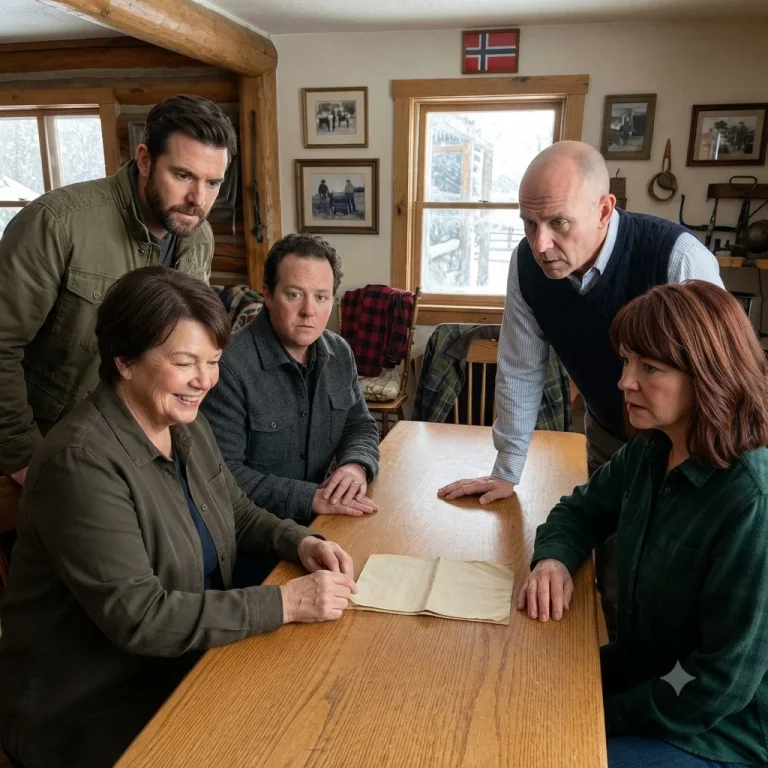
Søndagsstek. La oss snakke som en familie.
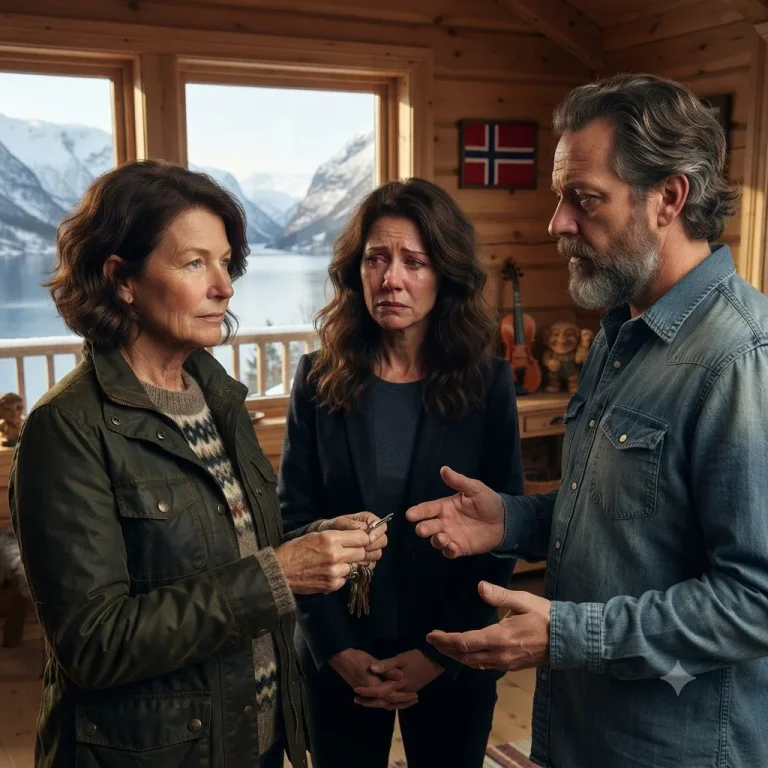
Søndag ettermiddag klokken fire sto jeg på kjøkkenet og holdt bilnøklene mine.
Messingnøkkelen til mammas hus var fortsatt på ringen.
Jeg hadde båret den siden jeg var femten.
Marissa sendte melding.
Hun lager paien din også. Vær så snill, kom for barna.
Jeg gikk ned trappen.
Satt i bilen min.
Lot motoren være av.
I tjue minutter kunne jeg nesten lukte mammas kjøkken.
Jeg kunne høre henne kalle meg sin lette.
En del av meg ønsket å kjøre til Kettering mer enn jeg noen gang hadde ønsket noe.
Jeg ville ha den andre enden av bordet.
Sausen.
Den gamle stillheten.
For stillhet var den eneste typen fred jeg noen gang hadde kjent i det huset.
I stedet ringte jeg henne.
Hun svarte umiddelbart.
Jeg hørte ovnsdøren lukke seg.
“Jeg kommer ikke, mamma.”
Stillhet.
“Not this Sunday. Not any Sunday until every dollar is paid back through the trust company and you write Grandpa and Marissa the truth in your own words. Anything involving money goes through Priya now. Not me.”
“You would do this to your own mother?”
“I’m not doing it to you. I’m doing it with my own name.”
Then I said the sentence I had been carrying all weekend.
“I’m not punishing you, Mom. I’m just done being the place you put things. You can have your key back. I’m keeping my mail.”
There was a long silence.
Then the line disconnected.
I sat in the car shaking for a while.
Eventually, I went upstairs and ate her lasagna.
It was still good.
And I was hungry.
Priya had told me the recovery process would likely move faster with a police report.
Monday morning at eight, I walked into the Kettering Police Department and filed one for identity theft.
A tired officer wearing reading glasses took my statement.
I handed him copies of everything.
He did not need the story explained twice.
The whole process took around forty minutes.
On the drive back toward Columbus, I stopped at the post office.
I removed the brass key from my key ring.
Put it into a small envelope.
Added one piece of paper.
Returned.
Then I mailed it to Woodbine Avenue by certified mail.
Signature required.
I wanted a record of that too.
Marissa had asked me to keep everything in the family.
I finally understood that was exactly what I was doing.
I was keeping the truth in the family.
Just on paper instead of inside Grandma June’s glass dish.
Three months later, in January, Harlan & Pike recovered the full $112,000.
Mom borrowed against her house to repay it.
The prosecutor’s office offered her an agreement tied to full restitution.
When they asked what I thought, I said it was fair.
I did not need to watch my mother stand in a courtroom.
I needed the record corrected.
She wrote Grandpa a letter.
She wrote Marissa one too.
Grandpa let me read his.
It was two pages long.
It said she was sorry.
It explained a great deal about caring for Grandma during her illness and very little about me.
She never wrote me a letter.
Mostly, I have made peace with that.
Some apologies never arrive.
You build your life anyway.
Marissa started sending me $500 a month on her own.
She called it the wedding money.
The first payment came with a note.
Not because the bank asked. Because I should have.
We met at a park in Beavercreek in February.
The grass was hard with winter frost.
Marissa cried.
I let her.
Lily ran across the grass and wrapped both arms around my waist and refused to let go.
Priya called once more.
Harlan & Pike had changed the way they handled contact changes requested by phone.
Now, when somebody changed an address or email, the company sent confirmation to both the old contact information and the new.
Then it waited.
It was a small procedural change.
But somewhere, another woman might have a harder time disappearing from her own paperwork.
One Tuesday afternoon in late January, I came home from a deposition and opened mailbox 3B in the lobby of my building.
I used my own small silver key.
Inside, above the pizza coupons, was an envelope with a gold oak leaf in the corner.
Addressed to:
Ellen R. Mercer.
My address.
My quarterly trust statement.
The first one I had ever held in my own hands.
I opened it in the lobby.
By then, I had exercised my right to make a withdrawal for exactly three things.
I paid the final $1,900 on my school loan.
I bought a new stenography machine.
The good one.
And I put a down payment on a small duplex in Clintonville with a porch and a yellow front door.
The rest stayed where it belonged.
I stopped accepting night transcript work.
For the first time in a decade, I had evenings.
Grandpa found Grandma June’s pot-roast recipe in an old box, and I taught myself to make it.
It turns out she used more onions than Mom ever did.
The graduation card with the old $500 check is on my refrigerator now, held up by a lemon-shaped magnet.
Resten er hos moren din. Få det til å telle.
I see it almost every morning while the coffee brews.
The rest isn’t with my mother anymore.
It’s with me.
And I’m trying to make it count.
My Sundays are different now.
I don’t drive to Kettering.
I drive to Brook Haven.
Grandpa and I eat lunch at a little table near the dining-room window.
Soup.
Bread.
Whatever terrible pie they are serving that week.
Last Sunday, I showed him how to filter junk mail.
He was absurdly proud of himself.
Then he typed something with two fingers, frowned at the screen, and pressed Send.
My phone buzzed on the table between us.
Grandpa looked over his glasses with a perfectly straight face.
“Did you get the email?”
I opened it.
He had sent me an old photograph of Grandma June when she was young, laughing while holding up a letter.
“I got it, Grandpa.”
And for once, nobody at that table had to handle anything for anybody.